Showing posts with label Alberta. Show all posts

Wednesday, September 9, 2026

From Two Immigrants to a Ukrainian Canadian Community: The Beginning of Ukrainian Immigration to Canada

September 7, 1891, marks a defining moment in the history of Ukrainian Canada. On that day, two 33-year-old peasants from the village of Nebyliw, Kalush district, in Eastern Galicia, Ivan Pylypiw (1859-1936) and Vasyl Eleniak (1859-1956), stepped off the steamship Oregon in Montreal after a 22-day journey. They chose this overseas adventure because of rumors of “free land” in Canada: you could get up to 65 hectares for $10. German friends who had settled in Canada encouraged them. Their arrival is widely recognized as the beginning of Ukrainian immigration to Canada.

They returned to Austria-Hungary (now is Ukraine) with encouraging reports on farming opportunities in Canada. They then returned to Canada with friends and families and settled in Alberta. In 1895, Dr. Joseph Oleskow from Halychyna toured Canada and wrote glowing reports and descriptions of farming on the Prairies. He published a booklet, "About the Free Lands", which encouraged Ukrainian immigration to Canada.

From these humble beginnings grew a Ukrainian Canadian community that today numbers more than one million people.

Why did Ukrainians come to Canada?

The decision to leave their homeland was not an easy one. In the late nineteenth century, many Ukrainians in Eastern Galicia faced economic hardship, poverty, limited access to land, and social and national discrimination. For peasant families, opportunities to improve their circumstances were often extremely limited.

Canada, by contrast, was actively seeking immigrants.

The Canadian government wanted settlers to populate and develop the vast Prairie West. Immigrants were needed to cultivate the land, build railways, work in mines and forests, and contribute to the development of growing communities and industries.

For many Ukrainians, Canada offered something increasingly difficult to find at home: land, opportunity, and hope for a better future for themselves and their children.

Pylypiw and Eleniak were among the first to make the journey. Their experience would soon be followed by thousands of others.

Leaving home for an uncertain future

The journey to Canada was long, difficult, and often perilous. Immigrants left behind parents, siblings, relatives, friends, familiar villages, and the land of their ancestors. Most arrived with very little money and few possessions.

What they lacked in material wealth, however, they brought in abundance: determination, resilience, a willingness to work, and a deep attachment to their language, culture, traditions, and homeland.

These qualities would prove essential as Ukrainian immigrants established farms, built homes, cleared the land, worked on the railways, entered the mines and forests, and established new communities across the Canadian Prairies.

The early settlers endured hardships that are difficult for many of us to imagine today. Yet they persevered, creating a new life while maintaining connections to the culture they had left behind.

The importance of Taras Shevchenko

For many of the early immigrants, Ukrainian culture was inseparable from the writings of Taras Shevchenko, Ukraine's great poet, writer, and national figure.

Many immigrants were familiar with Shevchenko's works before leaving Ukraine, and some brought copies of his poetry—including his famous Kobzar—with them to Canada.

Shevchenko's words spoke directly to people who understood poverty, injustice, displacement, and the longing for freedom. His compassion for ordinary people, his courage in the face of adversity, and his belief in human dignity provided inspiration to immigrants confronting the enormous challenges of establishing themselves in a new country.

For Ukrainian Canadians, Shevchenko became more than a literary figure. He became an important symbol of Ukrainian identity, cultural survival, and hope.

Building Ukrainian Canadian communities

Ukrainian immigrants did not simply establish farms and places to live. They began building communities almost immediately.

Churches became important centres of spiritual and social life, while community organizations, cultural groups, schools, reading rooms, and other institutions helped immigrants preserve their language and traditions and educate the next generation.

The development of Ukrainian cultural and educational life was particularly significant because many immigrants recognized that building a future in Canada did not mean abandoning their Ukrainian identity.

In Winnipeg, for example, a Taras Shevchenko Reading Room was operating by 1903, and the first recorded Shevchenko Concert took place on May 1, 1904. The Ukrainian-language press also began to develop. Kanadiysky Farmer (Canadian Farmer) began publication in 1903, and the first Ukrainian book was printed in Winnipeg the following year. A Ukrainian bookstore followed in 1905.

These developments helped create an intellectual and cultural network that connected Ukrainian communities across Canada.

In 1918, the Ukrainian Labor Temple Association was established, eventually becoming associated with the development of the Ukrainian Labour Temple movement and, later, the Association of United Ukrainian Canadians.

These organizations and institutions played an important role in helping Ukrainian immigrants navigate their new lives while preserving a sense of community and cultural identity.

From prairie settlers to Ukrainian Canadians

The first generations of Ukrainian immigrants played an important role in transforming Canada's Prairie provinces.

They cleared and cultivated land, established farms and businesses, built churches and community halls, organized cultural activities, and helped develop the towns and rural communities in which they lived.

Their contribution extended far beyond agriculture. Over succeeding generations, Ukrainian Canadians became teachers, doctors, lawyers, scientists, artists, business owners, politicians, military personnel, community leaders, and professionals in virtually every field of Canadian life.

The story that began with two immigrants arriving in Montreal in 1891 became a story of millions of individual journeys, families, communities, sacrifices, achievements, and contributions.

From two people to more than one million

On September 7, 1891, Ivan Pylypiw and Vasyl Eleniak could not have known what their arrival would eventually mean.

They came to Canada seeking opportunity, land, and a better future. Instead, they became the starting point of a remarkable chapter in Canadian history.

Over the next 135 years, successive generations of Ukrainians would come to Canada, arriving during different periods and under very different circumstances. Each wave added another chapter to the story of Ukrainian Canada.

Today, Ukrainian Canadians continue to celebrate and preserve their language, culture, traditions, music, dance, faith, food, history, and family heritage. They continue to pass these traditions from one generation to the next while contributing to the broader Canadian story.

The journey that began with two people crossing the Atlantic has become a story shared by more than one million Canadians of Ukrainian descent.

From two people to more than one million. It is estimated to be over 1,200,000 Canadians of Ukrainian descent.

From a journey across the ocean to 135 years of building a life in Canada.

From two Ukrainian immigrants to a vibrant Ukrainian Canadian community whose story continues to be written today.

This is the story of Ukrainian Canada.

A Genealogy Note:

My own Kalynchuk and Stetsko families were part of this early immigration story. They departed Hamburg, Germany, on April 15, 1897, and arrived at the port of Halifax, Nova Scotia, on April 30, 1897.

On April 30, 2027, my family will mark the 130th anniversary of their arrival in Canada. Their journey began in the village of Strilkivtsi, in the Borshchiv district of what was then Austria-Hungary and is now Ukraine.

Their story is a reminder that the history of Ukrainian immigration to Canada is not simply a story of dates, ships, and statistics. It is also the story of our own families—the people who left their homes, crossed the ocean, and began building new lives in Canada.

I encourage you to investigate your own family's arrival story. Passenger records, immigration files, homestead records, naturalization records, church records, census records, and community histories can help you discover when your ancestors arrived, where they came from, and how they began their lives in Canada.

Perhaps, like my own family, your ancestors were among the early Ukrainian immigrants who helped lay the foundations of Ukrainian Canada.

Further Reading:

Ukrainians in Alberta: Early History
https://www.ualberta.ca/en/canadian-institute-of-ukrainian-studies/centres-and-programs/kule-centre/ukrainians-in-alberta.html

Wasyl Eleniak, Internet Encyclopedia of Ukraine
https://www.encyclopediaofukraine.com/display.asp?linkpath=pages%5CE%5CL%5CEleniakWasyl.htm

Ivan Pylypow, Internet Encyclopedia of Ukraine
https://www.encyclopediaofukraine.com/display.asp?linkpath=pages%5CP%5CY%5CPylypowIvan.htm

Wasyl Eleniak, Wikipedia
https://en.wikipedia.org/wiki/Wasyl_Eleniak

Iwan Pylypow, Wikipedia
https://en.wikipedia.org/wiki/Iwan_Pylypow

Trailblazers of Ukrainian emigration to Canada: Wasyl Eleniak and Ivan Pylypow
by Nay, Marshall A., 1924-
https://archive.org/details/trailblazersofuk0000naym

Ukrainian Canadian History and Settlement
https://thecanadianencyclopedia.ca/en/timeline/ukrainian-canadian-history

The First Immigration (1891-1914)
https://www.torugg.org/History/history_of_ukrainians_in_canada.html

The First Wave of Ukrainian Immigration to Canada (1891-1914)
https://usctoronto.ca/ukrainian/first-wave-ukrainian-immigration-canada-1891-1914-galicia/

Iwan Pylypow
Wasyl Eleniak


Advertisement to come to Canada, 1900s

Sunday, November 9, 2025

Visiting the Musée St. Paul Museum and their Ukrainian Exhibit

Larisa Sembaliuk Cheladyn had posted on October 19, 2025, on Facebook, one photo of a motif that she had completed and installed at the Museum in St. Paul, AB, and this caught my attention.

“Done and delivered to the Museum in St. Paul, AB. BIRDS were very common motifs painted and stenciled on walls among immigrants from Bukovyna. This Pattern is originally from Borivtsi, Ukraine. It was inspired by embroidery on a blouse by "Mrs Peter Zukiwsky nee Zojitsa Watamaniuk" c 1935 while living near Shandro, AB.”


This warranted a trip to St. Paul. I checked out their website and saw that they are open on Wednesday and Thursday, 10 am to 4 pm, during the off-season. Note that they are closed in January and February. Admission is $10 per adult. They also provide personal tours if you call or email them in advance.

I was expecting a small room, but was surprised and taken aback. It was a very cold day, so we did not check out the other buildings on the site. This is for another trip in the spring of 2026. I also want to spend more time looking at each of the items in the Ukrainian display and other sights.

They have two museums in one. The Musée Historique de St. Paul Historical Museum and the Peoples’ Museum Society of/de St. Paul & District. We saw the School House, St. Paul de Metis display, Wanchuk Lumber Camp Model, Hair Salon, Vintage Dental Display etc.

This area of our province of Alberta (previously known as NWT) “was important to First Nations groups and fur traders. The important Winnipeg Trail from Fort Winnipeg to Fort Edmonton passed through here. Father Lacombe established a Metis settlement on the shore of the local lake in 1896. The Peoples’ Museum Society of St. Paul & District uses a variety of displays to illustrate how farming has changed since the first homesteaders settled here.” 

A new display is the “Ukrainian Display”. “Dr. Amil Shapka has worked hard to update their Ukrainian Cultural Display. This display honors our Ukrainian Immigrants with their stories of survival, photos, artifacts, traditions, etc. You will not be disappointed!”

So true. This project is a legacy of the St. Paul & District Ukrainian Cultural Society, created by a dedicated and talented team. I was truly impressed by the scope of the collection and the thoughtful effort that went into assembling this display. It is exceptionally well-researched and stands as an artistic masterpiece, featuring original documents, handmade implements, and more.

The handout includes sections on:

• Why did they come?

• Who were they?

• Journey to Canada

• Heading West

• Almost There

• The Farm

• By the sweat of their brows

• Immigrant Women

• Health and Medicine

• Faith and the New Church

• Education and the Ukrainian Press

• World War I and “Enemy Aliens”

This matches to the historical panels in the display rooms. They have these handouts in English, French and Ukrainian!

Dr. Amil Shapka and Larisa Sembaliuk Cheladyn are second cousins! Some of the Ukrainian settlers in the display are their ancestors, relatives, or neighbors. I was really excited to see the focus more on Bukovyna, as Galicia seems to take so much of the spotlight in general. This exhibit is focused on local history, and more of the early settlers in this area just happen to be from Bukovyna, which is reflected in their content. Surnames include Pylipiw, Eleniak, Ruptash, Eliuk, Fakas, Zacharuk, Taschuk, Kuzyk, Sembaliuk, Delawski, Kordowski, Pawliuk … (note that I am related to the Pawliuk family through my Baba's family branch).


“Mother dug a plot of land and planted the wheat she had brought from the old country in a small, brittle bundle. Every day, she watered it with her tears.” 
~ Memories of Maria Adamowska ~


This photo does not show everything. The display is bigger than this!


For more information:

Musée St. Paul Museum
https://stpaulmuseum.ca/  

Musée St. Paul Museum, Go East of Edmonton.com
https://goeastofedmonton.com/places/st-paul/musee-st-paul-museum/  

It was a picture that caught my attention, so I hope that some of these photos attract your interest! Definitely worth a drive to St. Paul, Alberta, Canada.


Monday, August 19, 2024

Kalynchuk Family Reunion - June 29, 2024


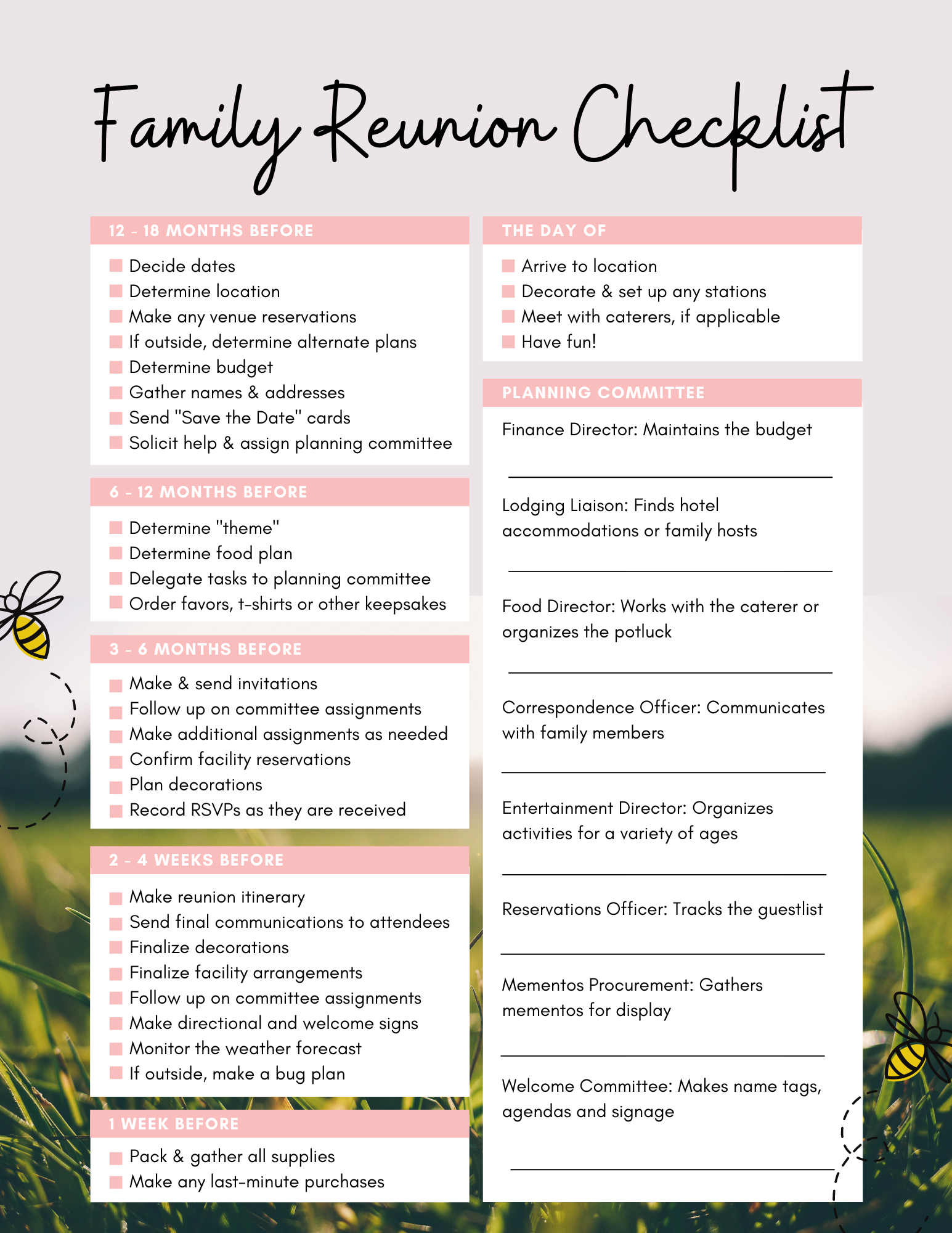
If you look further down on this webpage, I did post on Saturday, January 20, 2024, my first article is titled “Planning a Family Reunion in 2024”. This 2nd article is about completing a family reunion --- the lessons learned and tips.

I started over a year ago by googling for family reunion checklists, guides, and articles. I went under the Google search images page and typed in “family reunion checklist”. Here are a couple more resources.

Family Reunion Planning Checklist Free Download by Family Tree Editors
If you enter your email address, they will send you a free download of this checklist.
https://familytreemagazine.com/freebie/free-family-reunion-checklist/’

Step-by-Step Family Reunion Planning Guide Free eBook by Family Tree Editors
If you enter your email address, you can get this planning guide for free.
https://familytreemagazine.com/freebie/step-step-family-reunion-planning-guide/

Family Reunion Checklist, Urban Indian Center of Salt Lake
https://uicsl.org/wp-content/uploads/2021/07/Family-Reunion-Planning-Cheat-Sheet.png https://uicsl.org/how-to-host-a-family-reunion-easily-and-effortlessly/

Start of my planning!
In the summer of 2023, one of my brother’s agreed to help me on this family reunion. We decided to hold it in the summer of 2024, and I contacted some of my cousins who are farmers to make sure it was held during a time when they could attend. I also asked around if anyone who would probably attend, if there were any wedding weekend dates booked.

I then started a table in Word on possible venue locations. I check online for their websites and phoned for some initial information. One mistake that I made was that my initial estimate of attendance was too high (300+ and in the end it was around 150). I was basing this number on the first family reunion and how many more cousins have come along, but times have changed. Back in 1993 many of the older aunts and uncles were alive and more involved in the reunion and book. These people were my Dad’s first cousins. Some also  knew their grandparents who came from Galicia.

In 2023 and 2024, we live in a different world. On the one hand it was easier to locate some cousins due to Facebook, Ancestry and search engines. On the other hand, people are more afraid of being contacted and especially sharing their personal information because of scams and fraud. Plus people are busier and visit less with cousins or are not interested in family history.

I set up a separate bank account and started to draft a budget. I started gathering relatives' contact information and created an Excel spreadsheet to record the info. In my email inbox, I created a new folder for this reunion and expanded it over time with subfolders.

My brother went with me to check out 3 venues. I initially had 10 venues on my list. We both also checked out a few places on our own. It is important to ask a lot of questions. There was one place that we really liked but the buffet quote was too high. Another beautiful venue in a neighboring town had columns in the main ballroom that blocked the view for some attendees. We were looking at the seating limits, deposit amount, buffet quote, extra costs, and what additional services were available. We settled on the Ukrainian Youth Unity Centre but only two weekends were still available for the next summer (2024). Depending on the location, you might have to book the venue 1.5 to 2 years ahead of time.

When we met with the UYUC manager, we were told lots verbally and I was busy taking notes. We picked the date on the June long weekend and made the deposit. When we contacted this venue months later to start on the details, there were some changes. A new manager, no longer an ice cream shop on the corner, and no longer picnic tables outside. We paid an additional $300 for a green lights garland hanging from the ceiling to the side walls. Little extras like this really added to the abundance. We used the in-house white table linens to save money. It was all about balance. On Google Maps you can see where this venue is located and what is around it.

Ukrainian Youth Unity Complex
https://www.uyuc.ca/


I decided on a theme and reunion colors. Green, gold, and white with sunflowers. I started by checking out Amazon.ca, Etsy, Michael’s, Party City, and Dollarama stores and borrowing from extended family members. I got some table decorations, also for the memorial table, front registration table, and photo booth props, etc. The Family Reunion banner was an excellent purchase and really stood out on the stage. The sunflower decorations were also purchased from Amazon.

MEHOFOND 10x7ft Family Reunion Backdrop Family Tree We are Family …
https://www.amazon.ca/dp/B0C7ZRFXTQ


We rented DJ equipment, and I learned at the reunion that this was a waste of money ($535.00). I should have asked more questions about the venue’s AV equipment. Actually, I needed to take one of my family members to check out their sound equipment at the venue. Today one only has to bring an iPad with a Spotify account and plug it into the venue’s sound equipment. We had a live singer so got a microphone from the DJ rental but no microphone stand. One of my cousins figured out that there was a steel pole from the centre ceiling on the stage that came down and he used some wiring to attach the microphone to the pole.


I asked my Ukrainian friends for a referral of a Ukrainian newcomer who creates live flower table centrepieces. Lesia was so reasonable. I picked up the centrepieces on Saturday morning, the day of the reunion so they were fresh and in good shape. They were such a hit at the reunion with cousins grabbing them at the end of the night when I announced that they could take them home. I had some wildflowers in the centrepieces to honor a cousin who had passed away from cancer. On the tables, there was green foil confetti to honor the farmers in our family and the small sunflower decorations to honor our Ukrainian ancestors. I can give serious inquiries Lesia’s contact info.

I had also picked up lots of children games and pinatas at Dollarama stores. I announced that the kids could take home all of the games. Just outside of the building was a large, landscaped area to set up the games for the kids. I did little personal things like getting clear labels at Staples then got an image online that I could add info to and put it on the jars that I got at Dollarama, for the table centerpieces. I tried to save money wherever possible.

Got a balloon air pump from Party City, liquor tickets from Dollarama, ordered USB sticks from Amazon, and other items from Walmart and Staples which saved time and money. It is worthwhile to shop around. Also being organized and having a good to-do list helped a lots. I took photos on my mobile phone. I got receipt books and made sure that I had checks and balances on recording the money that we were spending and especially the money coming in (who ordered what). I was collecting money for the reunion registrations, the 2024 family history book, or an USB stick with the first family reunion, PDF scan of the 1993 family history book and PDF of the 2024 family history book, etc.

I was left confused on what insurances I needed to get. The UYUC manager gave me a couple of names (PAL Insurance and Duuo) and two different types of insurance, event liability insurance and host liquor liability insurance (because we were providing the liquor and selling it). On the venue website, they list PAL Insurance (Canada) but I did not like all the questions that they were forcing me to answer on their website, e.g. marijuana coverage.

Duuo by Co-operators offers both insurances as a package and was so straightforward dealing with online and via email. Click on Insurance Get Quote button, then “I’m hosting an event”. It came to a little over $220.00 for 150 people, for one day.

Duuo by Co-operators
https://duuo.ca/

For the liquor license, you just go on the AGLC website, and it costs $25.00. We got a Special Events, private resale SEL license. https://aglc.ca/liquor/liquor-licences/apply-liquor-licence/liquor-licences-private-special-events

We went with Wine and Beyond Windermere to purchase the liquor. A staff person went over with us on the selections, keeping in mind items on sale and later sent me a quote via email including quantity, item number, description, unit price, taxable and sub total amount. We went with two kinds of beer, a couple different kinds of coolers, white and spiced rum, whisky, vodka and a case of each white and red wine. One thing to watch for is that you save on buying larger sizes but if it is open, then you can’t return it. The store gave me the number of servings for each, and I was able to figure out the cost per item. One mistake that I made was having different liquor tickets for the beer vs coolers, vs hard liquor vs wine. I should have just averaged all of this and only had one liquor ticket.

I sent email updates to my cousins, starting with a “Save the Date” newsletter. Included information on the different family branches, the venue details, some activities ideas, menu selection, family reunion website, and questions and input needed selection. This was sent out in early December, timed for family to talk about during the holiday season.

I found a good website to create a Kalynchuk Family Reunion page at MyEvents.com. They have lots of examples of other websites to assist you in getting started and good advice on putting on a reunion. I started with an outline in MS Word with a table of contents and started to fill in the information. I found this to be easier than working directly from the website design dashboard. I initially thought that more cousins would be involved on the website but instead the reunion website was used to register and check on the details. I got in touch with close to 300 cousins so was glad to have this set up. People could register on the website, but I took care of receiving the payments myself, directly. I found that the two fees and ticket surcharge plus they hold the money for at least 10 days was too much. Many cousins paid close to the reunion date and some even paid at the event or later on!

Family Reunion Planning Center, MyEvent.com
https://myevent.com/family-reunions/family-reunion-planning-center

Another mistake that I made was in purchasing name labels at Staples and late on the night before the reunion was trying to print off the names with details (which family branch). The label sheets got jammed in the printer and it was a disaster. I thought that this would be straightforward and easy to do. Instead, it needed to be done ahead of time, put on an USB stick and printed off at Staples.

Etsy.com/ca was a wonderful place to purchase images for the family history book including the cover page (Wheat Clipart). The Family Reunion Conversation Starters quotes were a big hit. We cut them individually and put them on the tables. I received a download in an email then put it on a USB stick and printed off in color at Staples.

https://www.etsy.com/ca/listing/1500670701/printable-family-reunion-conversation
https://www.etsy.com/ca/listing/1406776214/ukrainian-ethnic-embroidery-with-corners
https://www.etsy.com/ca/listing/1561954353/watercolor-ukraine-clipart-70-png-travel

We got large boxes of snacks (chips and snacks) at the Wholesale Club for the afternoon which was a good idea. The venue provided a coffee station with water and Tang drinks. I did not think about also having some food/snacks for later at night, near midnight. Some of my cousins ran out to Tim’s and got donuts!

I also canceled the Kalynchuk Family Cookbook project due to a lack of interest. I did up a display table on my family history and had friends there who had a table on Ukrainian culture and folklore.

I paid $100 for the large screen on the stage and brought my laptop with the 1993 family reunion video on it. A cousin was able to get it to play on a loop. This was a real highlight in the afternoon. Near the end of the event, I had two cousins approach me that they are willing to organize the next Kalynchuk Family Reunion (and it will not be 30 years from now). It feels so good to pass on the torch.

Cousins volunteered to cover the liquor ticket sales and registration tables, so I did not have to hire 2 staff. Also, the UYUC venue suggested at the beginning to hire 2-3 security guards, but we did not need to do this. There were no security problems at this reunion.

A good piece of advice I got for the next reunion is to have each of the tables have someone stand up and introduce everyone at the table and say how they are related to us. Cousins and siblings from the same family branch tended to sit at the same table.

Another piece of advice is to watch for cousins who are not acting in good faith. It is those naysayers and bullies that I am talking about. At this reunion, lots told me that they had a really good time and thanked me for organizing it. My focus was on the majority. I wanted them to have a wonderful experience, especially for the children and younger ones. They are our next generation.

How To Deal With Difficult Family Members at A Reunion
https://getting2theroots.com/difficult-family-members/

The results that I see from putting on this reunion is that more cousins have become friends on Facebook and more of them are attending family events, especially the younger ones. I am getting quite a few inquiries from cousins wanting the contact info to get back in touch with other cousins who they knew in their youth. There is also a huge interest in our great grandparents’ homestead which some of us visited on the Sunday right after the reunion.


Saturday, January 20, 2024

Planning a Family Reunion in 2024

A family reunion is an occasion when many members of an extended family congregate. I am in the process of planning a family reunion in June of 2024. I have found some family reunion articles which I am listing below. I also google searched for family reunion checklists and worksheets in PDF and as images then saved them on my computer. I then compared them for the best ones. This gave me lots of ideas to work with.

I have created a family reunion website at the MyEvent.com for my family members. This website was fairly easy to set up and the monthly fee is reasonable. With this website, the cousins who can’t make it to the reunion can still interact with each other as it has pages like family profiles, photos, memorials, family memories, family recipes and guest book besides the reunion schedule, registration, travellers’ information etc. They have lots of good information on their website and also send you weekly email newsletters.

https://myevent.com/family-reunions

I coordinated the first family reunion in 1993 and learned a lot from this experience. This time I am making sure that I recruit more volunteers in advance and have set up a reunion planning committee. With the first family reunion, I was working a full-time job and this time I am retired. I also have one brother living in the same city as me who is very interested in this and is helping. In the beginning I listed out some potential locations and he went with me to see them. It is very important to bounce off ideas with family members and friends.

To cut down on expenses, we are looking at borrow items like the photo booth and props, outdoor games, decorations, etc. And I am looking at Etsy for some purchases and doing some DIY projects. One can even rent the DJ equipment with an iPad and pay a third of the price compared to hiring a DJ with equipment.

I am also approaching people who I know in the local Ukrainian volunteer community to assist with the Ukrainian entertainment, staffing and table displays etc. For example, I might have a lead on a Ukrainian newcomer who can edit the 1993 video of our last family reunion. The staff who we have to hire at the event (liquor ticket sellers, security), I am hoping to get Ukrainian newcomers. I am lucky that some of my cousins still speak Ukrainian as this will add to our heritage theme.

We are also holding this reunion at the Ukrainian Youth Unity Complex in Edmonton, AB so of course we will be served Ukrainian food at the banquet buffet!  

Social media has made it a lot easier to locate cousins especially with Facebook. And obituaries have helped to fill in the information on marriages, children and grandchildren.

As mentioned in my previous article, I am using Evernote and Trello to keep organized and on track.

One of the exciting new projects is a family heritage cookbook and there are lots of ideas online and even some templates. However, note that the printer told me to be careful on which fonts I use as they can get messed up with the printing equipment. One can print the cookbooks locally at a reasonable price and with a short timeline. I checked out a few different printers’ websites first. I am using College Copy Shop in downtown Edmonton at https://collegecopyshop.com/

One of the hardest tasks is locating all of the cousins as my ancestors came to Canada in 1897 and I am inviting all of the descendants of the first couple who stepping on Canadian soil, Elko and Anastasia Kalynchuk. Quite a few of their children, had many of their own and it continued! My estimate is that I have at least 300 cousins! Thirty years ago in 1993, I was in contact with more of my elder Aunts and Uncles. Now I am mainly working with a new generation, who are spread around the world. And now I am the Auntie. I am also doing a second family history book, this time for the period of 1994 - 2024.


Courtesy of cottonbro studio at Pexels.com


Family Reunions: 10 Steps to Plan (and Save Your Sanity)
Family Tree Magazine.com, by Mary Snyder
https://familytreemagazine.com/reunions/10-steps-to-family-reunion-success/

Family Reunion Planning Checklist Free Download
By Family Tree Editors (excellent checklist)
https://familytreemagazine.com/freebie/free-family-reunion-checklist/

The Complete Guide to Planning a Memorable Family Reunion
KOA.com, August 29, 2023
https://koa.com/blog/family-reunion-planning-guide/

Checklist: How to Plan a Family Reunion
Join Cake.com, by Sarah Kessler
https://www.joincake.com/blog/family-reunion/

Family Reunion Checklist
https://www.familyreunionhelper.com/media/docs/family_reunion_checklist.pdf

Saturday, November 18, 2023

School Records in Alberta

I went to the Provincial Archives of Alberta (PAA) with a printout of my Baba, Geto and Dad’s school district information along with the following additional details. I initially got the school district information from the following website but quickly discovered that this is their old website. I am listing the older and newer websites for PAA. Please use the second one.

Heritage Resources Management Information System (HeRMIS), Old website information so please do not use.https://hermis.alberta.ca/

Search the Provincial Archives of Alberta (PAA)
This is the website to use now.
https://searchprovincialarchives.alberta.ca/

The staff at PAA were excellent in finding an archive box on the Primula school district that my Dad, his sisters, and many of his cousins went to. However please note that these school records have not been indexed or processed. There is just the initial description of what is in the boxes on the PAA website. It was only by luck that the archive box I got was clearly written on the side with what is in it, that the PAA staff member was able to find this box. Even though I only got the archive box on one school records (Primula School, Daily Register on the students’ attendance and teacher info.), I am keeping my working notes just in case if in the future the PAA staff does discover the other school district records archive boxes.

For my Baba’s family her father, Partemy Pawliuk remained on the same farm in the Kysylew district. I knew his homestead was at NW-3-57-17-W54. For my Geto’s family his father, Elko Kalynchuk homestead at NE-36-56-18-W4 in the Limestone Lake district but they moved in 1906 and ended up in the Primula district in 1909.

I then listed out the birth dates of my Baba and her siblings and added 6 years to come up with the year that they probably started grade one. For example, my Baba was born in 1904 + 6 = 1910. My Geto was born in 1901 – 6 = 1907, his brother John was born in 1895 + 6 = 1901 and sister Maria was born in 1900 + 6 = 1906. Both John and Maria are listed on the 1911 and 1916 censuses as able to read and speak in English.

I then went on Ancestry.ca and checked the 1906, 1911, 1916 and 1921 Censuses of Canada to see which children are listed that they can read and speak in English as I knew that not all of the children in my Baba and Geto’s families were sent to school. For example, I was told that my Baba went to grade five and that my Geto did not get a formal education but that some of his siblings did, e.g., his older brother Ivan (John). My Dad started school at the Willow Range school and took two years of grade one as he did not speak English when he starting. He then transferred to the Primula school and went to grade eight. He quit school at the age of 16 to go work at the Lindbergh Salt Plant. I used this census information and the oral family history as a guide but was looking for the evidence in the school records and actual school pictures with my family members listed.

An example, in the 1921 Census of Canada, my Baba is listed as Sandyna Pawlak, 16 years of age and “yes” to reading and speaking English. Her sister Anna is 12 and listed as a “student” and can read and speak English and their brother Daniel is 23 and can read and speak in English.

Limestone Lake School, 1900
Copyright Status, Expired
I then checked in local history books and found articles on the Kysylew school in the “Dreams and Destinies: Andrew and District”; Limestone Lake school in the “Along Victoria Trail: Lamont and Districts” and in the “Pride in Progress: Chipman, St. Michael, Edna/Star and Districts”, and the Primula School in the “Land of Red and White: Frog Lake and Districts to 1976” books.

In some of the local history books are maps of the school districts and homestead locations. This will help you to figure out which school(s) your ancestors went to. You also have to figure out which school division the school was in, at a certain time period. It is good idea to also look at neighboring local history books as I found overlaps. I wrote an earlier blog article on local history books including where you can view them (PAA) and take them out at the Edmonton Public Library or the Alberta Genealogical Society's library for members-only.

Family History books are another good source of background information on local schools info. including student group pictures. I was lucky enough to have known Walter Sharek as my Uncle and friend. His older sister Dora Sharek married my Geto’s older brother John Kalynchuk. It was so cool to look through the Primula School records at the PAA and first see Walter Sharek as a student in 1926 then to see him come back as their teacher in 1936. He was the MC at the 1993 Kalynchuk family reunion and I republished two of his articles on the Primula School and Primula District in the Kalynchuk Family History book.

The first student listed (highest grade)
is Walter Sharek, Sept. 1926
Another good source is local historical societies, and I found the following information from the Elk Point Historical Society on the Primula and Willow Range schools.

Willow Range School – Early 1940’s with Mary, Nancy, Dolly, and Lily Kalynchuk in the student and teacher group picture.  
 https://elkpointhistory.ca/class-pictures-1940s

Primula School Class Pictures with the second and third student group pictures including my Dad, Steve Kalynchuk. https://heinsburg.ca/primula-school-class-pictures

Fate of Country Schools which includes the Willow Range and Primula schools' fate. 


Primula School Census, 1932-1933
A highlight when looking at the Primula school records was to find the entries for my Dad starting school in Primula and especially to see that in his second year, his attendance improved! And I discovered that my Aunt Barbara (daughter of Harry) went by her middle name in school, Annie. This had me puzzled for awhile as there was also an Annie Kalynchuk, daughter of John. My Aunt Pauline went by Polly.

One good find in this archive box was the occasional “School Census” form which lists the student’s name, date of birth, distance from the school and full name of the parent or guardian and their post office address. I found this in the 1932-1933 Daily Register. I also found the occasional "Transfer card" when a student transfered from one school to another. I found a transfer card for Donald Buksa when he transferred from the Willow Range school to the Primula school on April 12, 1944 and the post office was at Gratz.

Also interesting to note that in 1935 the school subjects for first year of High School (probably grade ten) was English Literature I, English Composition I, History I, Algebra I, Geometry I, General Science I and Latin I.

My Mom has said that my Baba spoke broken English and because she rarely left the farm especially in the early years, this is understandable. In later life, she went to the Elk Point theatre to watch movies. My Mom said that my Geto spoke good English, but he visited the neighbors and traveled to town more often. When working on the Kalynchuk Family History book I was told by my Aunt Nancy (my Dad's older sister) that my Baba knew enough English that she helped the neighboring Ukrainian ladies with their Eaton catalogue orders, in the earlier years.

My Geto's older brother John Kalynchuk who married Dora Sharek had two questions on their marriage certificate for each to answer - if they can read and write in English. Both stated "yes' on February 17, 1925. John was a school trustee for the Primula School Division which later became the Two Hills School Division. And he served as a Councillor for the Ethelwyn District which later became the Vermilion River District.

Besides the fonds on school district records, there is also valuable information in the collections of important local leaders. For example, I found out that the Willow Range school was the first teaching job for Mrs. Mary Lobay. Her maiden name was Hawrelak. It was a wonderful experience to go through her collection at the PAA and I was able to confirm when she taught at the Willow Range school in her resume. She taught grade one to ten in the Two Hills School Division at the Willow Range school from 1939 to 1940. She went on to become a member of the Order of Canada and probably taught my Aunt Dolly and Nancy (sisters of my Dad). It is recorded that the Hawrelak family research goes back to 1739 and I am still trying to find these records. For a PAA request slip to access the Dr. Mary Lobay collection it is "Acc. No. PR0051", with nine boxes.

Theodore Nemirsky was the Wostok postmaster until 1912 and one day I plan on reviewing his collection at the PAA. https://searchprovincialarchives.alberta.ca/nemirsky-family-fonds

Even though my Dad quit school at 16 and ended up farming full time, his education assisted him in keeping really good farm records.

Joint farming by Steve and Harry 
Kalynchuk in 1959

Wednesday, September 27, 2023

German Settlers in Alberta and from Galicia, Volhynia, Bukovina, Poland, and Russia

Settlers from Germany had begun arriving in Alberta during the early 1880s. The completion of the Edmonton-Calgary Railway line eased the way for large groups to settle in the areas around Edmonton, Wetaskiwin and even Camrose but, generally speaking, these German settlers set up homes throughout the province. The foothills south of Fort Calgary provided familiar scenery to the first wave of German-speaking people from the Austro-Hungarian Empire. And, in 1883, they established a colony at Pincher Creek.

When my great grandparents with their two sons first arrived on their homestead near Andrew, Alberta, in the late fall of 1897, my great grandfather, Elko Kalynchuk went to work for German farmers near Bruderheim, AB and brought back some wheat, flour and a pig’s head. I was told that Elko walked to the German farm, breaking tree branches along the way. When I look on Google maps, I am surprised at the distance that he had to walk through the bushes. Bruderheim was a German colony at the time and became a town in 1905.

At the recent annual conference of the Alberta Genealogical Society (AGS), I was approached by some people who are researching on their German ancestors. Also, two local German genealogy societies (HSGPV and AHSGR) asked to be put on my mailing list, which I have done. I occasionally send out email updates on Ukrainian Canadian Genealogy. If you want to be added to this mailing list, you can email me at kalyna(at)outlook(dot)com

At this conference, I was happy to meet in person fellow researchers who are on my distribution mailing list or have attended the Zoom sessions which I put on. I am in the process of booking new speakers for the upcoming 7 or so months. I will post the details on this blog and through an email update.
 
Anthony and me chatting at the 2023 AGS Conference

When we are researching from the same regions as Galicia, Bukovina, Austro-Hungry, etc. then it is good to share information and resources with each other. I have visited the HSGPV/AHSGR office and am looking forward to networking with them. 

Alberta Genealogical Society, Edmonton Branch, German Special Interest Groups
German Heritage and Germans from Russia groups
https://www.abgenealogy.ca/special-interest-groups

Historical Society of Germans from Poland & Volhynia (HSGPV)
Library open by appointment on Thursdays, 587-454-0825
10014 – 81 Avenue, Edmonton.
https://hsgpv.org

American Historical Society of Germans from Russia (AHSGR)
Edmonton & District Chapter
https://www.german-russians.org/home
https://ahsgr.org/about/chapters/edmonton-and-district-chapter/

Society for German Genealogy in Eastern Europe
Focuses on Germans from Russia, Poland and Volhynia, located in Calgary, Alberta
www.sggee.org
https://www.facebook.com/groups/1812539775626960 (private group)

The Volga Germans – Alberta
https://www.volgagermans.org/history/immigration/canada/alberta

Society for German American Studies
https://sgas.org/

Germans from Russia Heritage Society
Based in Bismarck, ND, USA
https://www.grhs.org/pages/home

German Genealogy – Prussia, Austro-Hungary, Russia, Denmark, Swiss & More
https://www.facebook.com/groups/Germany.Prussia.AustroHungary.Denmark.Russia.Swiss (private)

Germans from Russia Societies - Family Search
https://www.familysearch.org/en/wiki/Germans_from_Russia_Societies

Germany Research Tips and Strategies - Family Search
https://www.familysearch.org/en/wiki/Germany_Research_Tips_and_Strategies

Germany Genealogy - Family Search
https://www.familysearch.org/en/wiki/Germany_Genealogy

A Profile of Alberta’s German-Speaking Communities
https://sites.ualberta.ca/~german/AlbertaHistory/
https://sites.ualberta.ca/~german/AlbertaHistory/historyframetop.html

German Canadians – Wikipedia
https://en.wikipedia.org/wiki/German_Canadians

German – Canadian Association of Alberta
https://www.gcaa.ca/

Monday, September 25, 2023

Romanian Settlers in Alberta and, from Bukovina and Transylvania

Many Romanian settlements from the provinces of Bukovina and Transylvania, immigrated to Canada in the late 19th century. At that time, the northern part of Romania was part of the Austro-Hungarian Empire. In 1914, there were 8,301 Romanians in Canada and a second source says that in the 1911 Census of Canada there was 15,000 Romanians in Canada.

One of my second cousins married a “Petruniuk” and this surname is on the list of the Romanian families who arrived from Boian, Bucovina, prior to 1900 and who formed the nucleus of the settlement of Boian, Alberta. However, as far as I know this family branch settled in Saskatchewan and I have a name of a village in the old country but can not find it on a map. This is going to take more research time as it looks like the village name is misspelled.

I also used to work with some people with the surnames of Toma and Knapp which show up near the early Romanian settlements in Alberta on old surveyor maps.

Last summer me, my brother and a friend who has some Romanian DNA went to the Romanian Pioneer Museum of Boian in Alberta. We had a good time. Some of my Baba’s extended family members from Bukovina showed up on the museum’s plaque. E.g., Tkachuk which I will have to check out further.

Courtesy of GoEastOfEdmonton.com

Romanian Pioneer Museum of Boian
https://www.facebook.com/boianalbertamuseum

Romanians of Boian Alberta and Bucovina
https://www.facebook.com/groups/316497192226

St. Mary’s Romanian Orthodox Church of Boian
https://boianchurch.ca/

Canadian Romanian Society of Alberta (Edmonton-Boian)
https://www.facebook.com/crsoa/
https://canadianromaniansocietyofalberta.org/
https://canadianromaniansocietyofalberta.org/their-arrival-in-alberta/

Romanian Genealogy Society
A branch group of the non-profit Minnesota Genealogical Society
https://romaniangenealogy.com/

Romania Genealogy – Family Search
https://www.familysearch.org/en/wiki/Romania_Genealogy

FamilySearch Romania
https://community.familysearch.org/en/group/96-familysearch-romania

Romania Resources – FEEFHS
https://feefhs.org/resource/romania

Romanian Genealogy
https://www.facebook.com/groups/romaniangenealogyhelp

Romanian Genealogy Society Research
https://www.facebook.com/groups/RGSconversations

Romanian National Archives
http://arhivelenationale.ro/site/

Romanians in Alberta 1898 - 1998, Canadian Romanian Society of Alberta, 1998

Romanians in Canada, Eleanor Bujea, The Romanian Orthodox Episcopate of America, 2009


Articles:

Romanian Settlement in Alberta
https://albertashistoricplaces.com/2016/01/13/romanian-settlement-in-alberta/

Romanians in Kalyna (Country)
https://www.kalynacountry.com/romanians-in-kalyna/

The story of the Romanian community of Boian in Alberta
https://thebunget.wordpress.com/2019/11/19/the-story-of-the-romanian-community-of-boian-in-alberta/

Romanian Canadians
https://www.thecanadianencyclopedia.ca/en/article/romanians

BOIAN – the oldest Romanian settlement in Canada -125 years of history
https://www.mrtv.ca/2023-07-15-16-boian-the-oldest-romanian-settlement-in-canada-125-years/

Romanian Canadians - Wikipedia
https://en.wikipedia.org/wiki/Romanian_Canadians

The Romanians of Saskatchewan: Four Generations of Adaptation, George James Patterson, 1977
https://books.google.ca/books/about/The_Romanians_of_Saskatchewan.html

Romanian Settlements (in Saskatchewan) - Facebook post
https://www.facebook.com/MeanwhileInSask/posts/romanian-settlementsbuilt-in-1902-st-nicholas-romanian-orthodox-church-is-the-se/717866978346317/

Thursday, September 21, 2023

Polish Settlers in Alberta and from Galicia

An immigration movement from Poland to Alberta was initiated in 1895. The Polish people were mainly Roman Catholic and came mostly from Galicia. According to the 1911 Census of Canada, there were 2,243 and in 1921 there were 7,172 Polish people in Alberta. The first two significant waves of Polish immigration to Canada were from 1854-1901 and 1902-1915.

When I started my genealogy and family research on the Kalynchuk family branch over 30 years ago I was told that my great grandparents, Elko and Anastasia Kalynchuk’s first son Wasyl, married a Polish girl from Vermilion, Alberta. When I traveled to the Ukrainian Catholic cemetery at Northern Valley with my Father, he pointed to a spot next to her husband, Wasyl’s grave and said that Anilia was buried there. She had no gravestone nor marker. A black cross has since been added.

Anilia Zaraska was born in 1895 in Mostys'ka, L'vivs'ka and came to Canada in 1913 with her father, Ivan (John), stepmother, Mary and two brothers, Wolodymir (Walter) and Michael (Mike). Mostyska is still in the Lviv Oblast (province) and close to the Polish border.

Screen Shot from Google.ca/maps

In 2002, I took on a big project with assisting my friend, Anne V. (Thoms) Lummerding with her Thoms Family History book. Her father’s family village is Stare Selo (Siolo) which is in the Przemysl Oblast and now in Poland. Stare Selo means Old Village. I made a trip to Salt Lake City to attend a FEEFHS Conference and in my spare time, researched in the Polish microfilms for Anne. I learned so much during this process. The records were in Latin which is easy to read (at least for me). Here is an example of what I found at the LDS Church History Library in Salt Lake City. Now, a lot of this information is available online and has been digitalized.

The Foundation for East European Family History Studies (FEEFHS)
https://feefhs.org/
https://feefhs.org/index.php/resource/poland


One of the issues in genealogical researching in the northwestern part of Galicia is that there was a population exchange between Poland and Soviet Ukraine. Ethnic Ukrainians were transferred to the Ukrainian SSR and ethnic Poles and Jews were transferred to Poland. The population transfer took place between 1944 to 1946.

Population exchange between Poland and Soviet Ukraine
https://en.wikipedia.org/wiki/Population_exchange_between_Poland_and_Soviet_Ukraine

World War II and Its Aftermath: Western Ukraine under Soviet and Nazi Rule
https://www.britannica.com/topic/history-of-Ukraine/World-War-II-and-its-aftermath


Organizations:

Canadian Polish Congress Alberta Society
https://kpkalberta.com/

Canadian Polish Historical Society
https://www.cphsalberta.org/
https://www.cphsvirtualmuseum.com/

Canadian Polish Research Institute
http://www.canadianpolishinstitute.org/

Polish Genealogical Society of America
https://pgsa.org/

Polskie Towarzystwo Genealogiczne (Polish Genealogical Association)
https://genealodzy.pl/index.php


Resources:

Polish Settlers in Alberta, Joanna Matejko (ed), 1979

Polonia in Alberta 1895-1995: The Polish Centennial in Alberta, Andrzej M. Kobos and Jolanta T. Pekacz (eds), 1995

The Polish Community in Canada, R.K. Kogler, 1979

History and Integration of Poles in Canada, W.B. Makowski, 1967

A Member of a Distinguished Family: The Polish Group in Canada, H. Radecki and B. Heydenkorn, 1976

The Poles in Canada, L.K. Zubkowski, 1968

In Their Words, A Genealogist’s Translation Guide. Vol. 1: Polish, Vol. 2: Russian, Vol. 3: Latin, Vol.4: German, J. Shea & W. Hoffman

A Translation Guide to 19th Cent. Polish-Language Civil-Registration Documents, Judith R. Frazin

Polish Parish Records of the Roman Cath. Church, G. Ortell

A History of Poland, Oskar Halecki, 1992

Poland: The First Thousand Years, P.M. Dabrowski, 2016

Jewish Roots in Poland (book), Miriam Weiner, 1997
https://en.wikipedia.org/wiki/Jewish_Roots_in_Poland

Polish Pioneer Settlements
https://www.cphsvirtualmuseum.com/the-beginning-of-a-community.html

Polish Immigration to Alberta before the Second World War
https://www.cphsalberta.org/publications/polish-immigration-to-alberta-before-the-second-world-war/

Poles in Kalyna Country - From Krakow, Poland, to Krakow, Alberta: Kalyna Country’s Polish Connections
https://www.kalynacountry.com/poles-kalyna-country/

Polish Canadians
https://www.thecanadianencyclopedia.ca/en/article/poles

Polish Canadians – Wikipedia
https://en.wikipedia.org/wiki/Polish_Canadians

Poland Genealogy
https://www.familysearch.org/en/wiki/Poland_Genealogy

Poland Online Genealogy Records
https://www.familysearch.org/en/wiki/Poland_Online_Genealogy_Records

Association of Polish Professional Genealogists
http://progenealogia.org/en/main-page/

Geneteka Genealodzy
https://geneteka.genealodzy.pl/index.php

Metryki.Genealodzy.pl
http://metryki.genealodzy.pl/

Polish Roots
www.polishroots.org/Home/Index

Polish Origins
https://polishorigins.com/

Researchers in Poland and Translation Services
Polish Genealogical Society of New York State
https://pgsnys.online/research/polish-researchers-translators/

Facebook Polish Genealogy Group (private group)

Monument honouring Polish immigrants erected at
Pier 21 in Halifax, Copyright of Globalnews.ca


Jewish Settlers in Alberta and, from Galicia and Bukovina

From the 1880s to 1919, was a start of the arrival of Ashkenazi Jews to Alberta.

The Alberta Ukraine Genealogical Project has information on the religious affiliation and primary language of conversation in the villages. If you go to their website at https://sites.ualberta.ca/~ukrville/Family_History_Portal/fhp.htm then click on “Maps”, then click on your District, then click on your village, it gives you the stat’s for the year of 1900.

In my Baba’s family village of Maliatyntsi, District of Kitsman there was 21 Catholic, 1274 Greek Orthodox, 45 Jewish and one “other”. Also, interesting to note that 49 listed German as their primary language of conversation. The majority spoke Ukrainian (Ruthenian).

In 2019, when I was in Ukraine I took a city tour of the city of Chernivtsi, and my tour guide Vasyl Kuzyk showed me the Palace of Culture and Jewish History Museum. We then went to the Turkish Square, and he pointed straight ahead and said that the Jewish Quarters is that direction pass the Turkish Square. I was too tired to walk that far but on my next trip to Chernivtsi, I will be checking it out. Vasyl does genealogical research for clients, has a car, is a driver and translator. He also can pick you up at the Chernivtsi Airport and translate documents for you. https://www.ace-interpreter.com/

Note that at its peak in 1941, more than 45,000 Jews lived in Chernivtsi. Today the Palace of Culture (also known as the Jewish National House) houses a museum dedicated to the history of Bukovina’s Jews.

Palace of Culture - Jewish People’s House (Chernivtsi) - 2021,
Copyright of Tripadvisor.co.uk

History of the Jews in Chernivtsi - Wikipedia
https://en.wikipedia.org/wiki/History_of_the_Jews_in_Chernivtsi

With doing more family research I am learning the importance of broaden my scope on local history. The Priest’s Grotto is near my Kalynchuk family village of Strilkivtsi, in the former district of Borshchiv (it is now in the district/raion of Chortkiv).

Borschiv was occupied by the Axis troops in July 1941 and several mass executions of Jews were carried out in the town. In April 1942 a Borshchiv Jewish ghetto was established here. Between spring and summer of 1943, approximately 400 Jews were sent to the Ivanovka camp and more than 2,300 Jews were shot in the Jewish cemetery. On the eve of the war there were about 3000 Jews living in the town.

Borshchiv Ghetto - Wikipedia
https://en.wikipedia.org/wiki/Borshchiv_Ghetto

The Jewish Ghetto, Borshchiv, Ukraine (then Borszczow, Poland)
Museum of Family History
https://www.museumoffamilyhistory.com/ce/ghetto/borszczow.htm

When I was at the Borshchiv Museum in the town square, I purchased a book on the Priest’s Grotto Caves. One of my nephew’s was interested in caves, so at the time I was thinking more of him. However later I learned more about these caves and about the stories of the several Jewish families who lived in the caves during the WWII, with some up to 511 days.

Priest’s Grotto – Wikipedia
https://en.wikipedia.org/wiki/Priest%27s_Grotto

The Cave - the Secret of Priest's Grotto
https://www.youtube.com/watch?v=q9UypyhdbHg

The Portal of Life Entrance to Priests Grotto Cave in Western Ukraine

Copyright of the "Europe Between East and West"

Reference:

Jewish Federation of Edmonton

Jewish in Alberta, Canada
https://www.jewishvirtuallibrary.org/alberta

History of the Jews in Canada
https://en.wikipedia.org/wiki/History_of_the_Jews_in_Canada

Jewish Canadians
https://library-archives.canada.ca/eng/collection/research-help/genealogy-family-history/ethno-cultural/pages/jewish-canadians.aspx

Jewish Canadians
https://www.thecanadianencyclopedia.ca/en/article/jewish-canadians

Jewish Roots in Ukraine and Moldova; Pages from the Past and Archival Inventories, Miriam Weiner, 1999, out of print, used copies of this book can be purchased online. It can be viewed at Internet Archive https://archive.org/details/jewishrootsinukr0000wein and a summary on the book is at https://en.wikipedia.org/wiki/Jewish_Roots_in_Ukraine_and_Moldova

The Miriam Weiner Routes to Roots Foundation Inc.
https://www.rtrfoundation.org/index.shtml
Ukraine section - https://www.rtrfoundation.org/archps3.shtml

Ukraine Jewish Records – Family Search Wiki
https://www.familysearch.org/en/wiki/Ukraine_Jewish_Records

JewishGen
https://www.jewishgen.org/

M. Rubin, "Alberta's Jews: The Long Journey," in: H. and T. Palmer (eds.), Peoples of Alberta: Portraits of Cultural Diversity (1985), 329–47

H.M. Sanders, "Jews of Alberta," in: Alberta History, 47 (1999), 20–26

Irving M. Abella, A Coat of Many Colours: Two Centuries of Jewish Life in Canada (1990)

Howard Adelman and John Simpson, eds, Multiculturalism, Jews, and Identities in Canada (1995)

Gerald Tulchinsky, Taking Root: The Origins of the Canadian Jewish Community (1992)